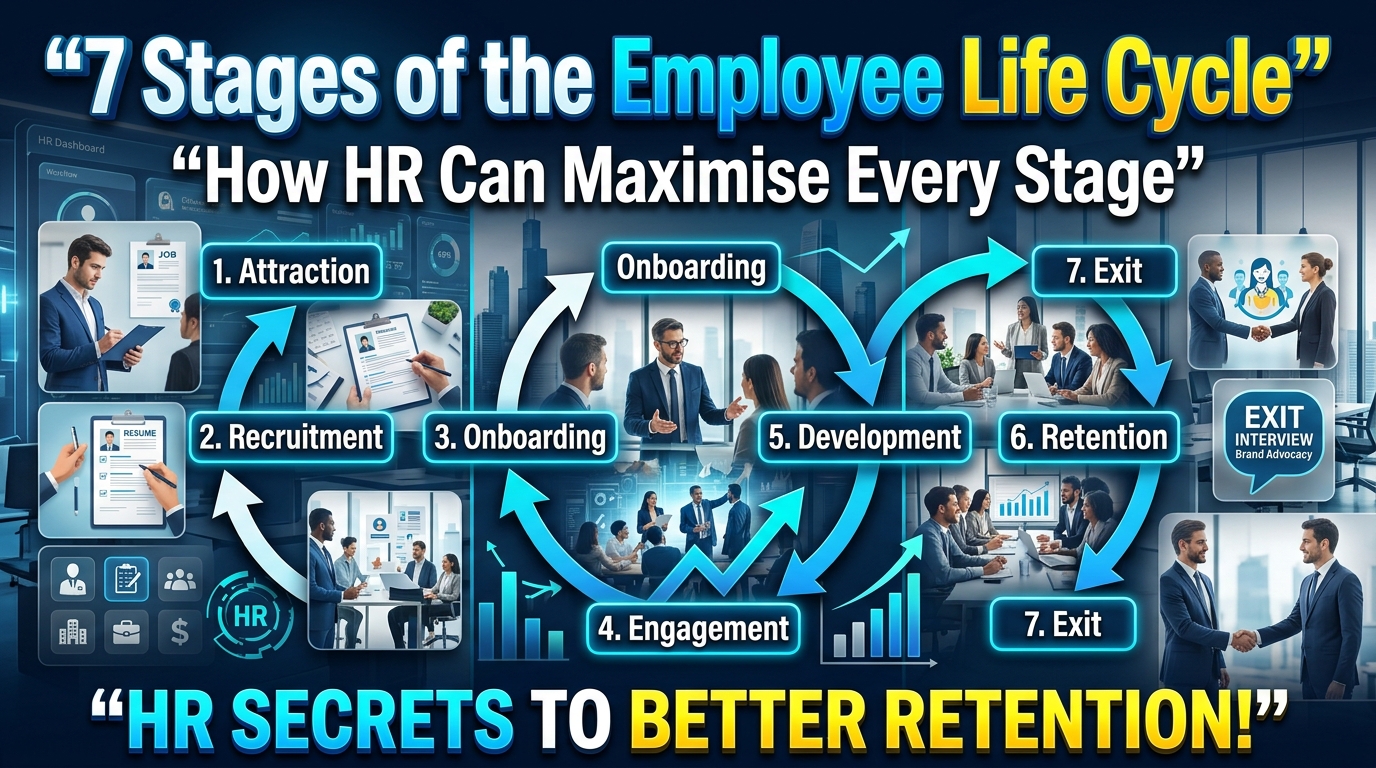
7 Stages of the Employee Life Cycle and How HR Can Maximise Each Stage
Learn the 7 stages of the employee life cycle and discover how HR teams can improve recruitment, onboarding, engagement, retention, and employee experience with smart HR strategies.
The employee journey does not begin on the first day of work — and it certainly does not end when someone resigns. Every interaction an employee has with an organisation forms part of a much larger process known as the employee life cycle.
Understanding the employee life cycle in HR helps organisations attract better talent, improve employee experience, strengthen workplace culture, and increase long-term retention. When every stage is managed effectively, employees feel supported, engaged, and motivated to perform at their best.
At ZestNexus, we believe people are at the centre of every successful organisation. That is why employee life cycle management should be treated as a strategic HR priority rather than simply an administrative process.
What Is the Employee Life Cycle?
The employee life cycle refers to the complete journey an employee takes with an organisation — from discovering the company as a potential employer to eventually exiting and possibly becoming a brand advocate.
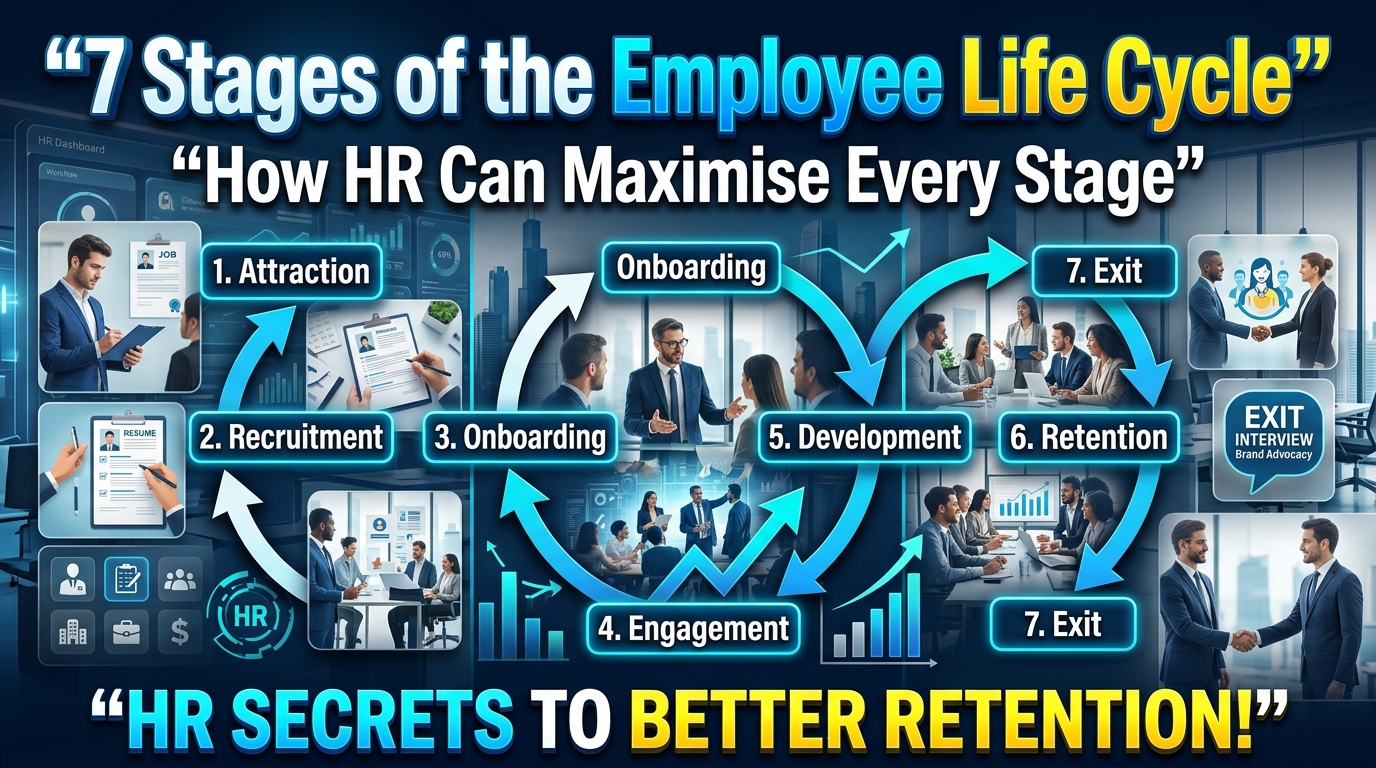
The HR employee life cycle typically includes seven major stages:
- Attraction
- Recruitment
- Onboarding
- Engagement
- Development
- Retention
- Exit and Advocacy
Managing these stages effectively allows HR teams to create a consistent and positive employee experience while identifying opportunities for improvement across the organisation.
1. Attraction
The employee journey starts before someone even applies for a role. Candidates begin forming opinions about a company through:
- Careers pages
- Social media presence
- Employee reviews
- Employer branding
- Workplace culture content
- Benefits and flexibility policies
A strong attraction strategy helps organisations stand out to skilled professionals who align with the company’s culture and values.
How HR Can Improve the Attraction Stage
HR teams should focus on building a clear and authentic employer brand by:
- Creating an engaging careers page
- Sharing employee success stories
- Promoting workplace culture initiatives
- Highlighting growth opportunities and benefits
- Showcasing flexibility and wellbeing support
A strong first impression helps attract higher-quality candidates and strengthens recruitment outcomes.
2. Recruitment
Recruitment is one of the most critical stages of the employee life cycle in HR. It involves:
- Writing job descriptions
- Posting vacancies
- Screening candidates
- Conducting interviews
- Extending offers
- Preparing employees for joining
A poor recruitment experience can discourage strong candidates, while a transparent and structured process builds trust early.
How HR Can Optimise Recruitment
To improve recruitment processes, HR teams should:
- Write clear and realistic job descriptions
- Reduce hiring bias
- Maintain consistent communication with candidates
- Simplify application processes
- Provide timely interview feedback
Using HR technology can also help centralise applications, manage interview workflows, and improve hiring efficiency.
3. Onboarding
The onboarding stage begins once a candidate accepts an offer. This phase introduces employees to:
- Company culture
- Policies and expectations
- Team members
- Work tools and systems
- Role responsibilities
A structured onboarding process helps employees feel confident, welcomed, and productive much faster.
How HR Can Improve Onboarding
Effective onboarding should include:
- Document collection
- System and software access
- Training sessions
- Team introductions
- Role-specific guidance
- Buddy or mentor support
A standardised onboarding process ensures every employee receives the same level of support from day one.
4. Engagement
Employee engagement reflects how connected, motivated, and committed employees feel toward their work and organisation.
Engaged employees are more likely to:
- Collaborate effectively
- Stay productive
- Share ideas
- Remain with the company longer
This stage has a direct impact on morale, productivity, and attrition.
How HR Can Improve Engagement
HR teams can improve employee engagement by:
- Encouraging regular feedback
- Recognising employee contributions
- Supporting work-life balance
- Promoting transparency
- Conducting pulse surveys and check-ins
- Creating recognition programmes
Listening to employees regularly helps organisations address concerns before they become larger workplace issues.
5. Development
Employees want opportunities to grow professionally. The development stage focuses on helping employees build skills, improve performance, and progress in their careers.
Organisations that invest in development create stronger internal talent pipelines while improving employee confidence and satisfaction.
How HR Can Improve Development
HR teams should support development through:
- Training programmes
- Performance reviews
- Mentorship opportunities
- Learning resources
- Career progression planning
- Skill development initiatives
Structured feedback systems and performance discussions also help employees identify strengths and improvement areas.
6. Retention
Retention focuses on keeping valuable employees within the organisation. After investing time and resources into hiring and training employees, businesses must create an environment where employees want to stay.
High turnover can increase hiring costs, disrupt team morale, and reduce organisational knowledge retention.
How HR Can Improve Retention
To strengthen retention, HR teams should focus on:
- Competitive compensation
- Career growth opportunities
- Employee recognition
- Mental wellbeing support
- Positive workplace culture
- Regular performance conversations
Stay interviews and continuous feedback can help identify concerns before employees decide to leave.
7. Exit and Advocacy
The employee life cycle does not end when an employee resigns. A positive exit experience can turn former employees into long-term brand advocates.
Employees who leave on good terms may:
- Refer future candidates
- Recommend the company publicly
- Return later with additional skills and experience
How HR Can Improve the Exit Stage
A strong offboarding process should include:
- Clear communication
- Knowledge transfer
- Exit documentation
- Equipment return processes
- Exit interviews
Exit interviews provide valuable insights into employee experiences and help HR teams improve workplace practices over time.
Why Employee Feedback Matters
Employee feedback plays a major role throughout the employee life cycle.
HR teams should regularly gather feedback through:
- Surveys
- One-to-one meetings
- Focus groups
- Anonymous feedback forms
However, collecting feedback alone is not enough. Employees also need visibility into the actions taken based on their suggestions.
When employees feel heard, trust and engagement improve significantly.
Importance of Employee Life Cycle Management
Effective employee life cycle management helps businesses support employees at every stage of their journey while improving organisational outcomes.
A well-managed employee life cycle can help organisations:
- Attract stronger candidates
- Improve hiring experiences
- Increase employee engagement
- Support professional growth
- Improve retention rates
- Build a stronger employer brand
- Enhance workplace culture
How ZestNexus Supports Employee Life Cycle Management
ZestNexus helps businesses create a connected and people-focused HR experience by supporting:
- Recruitment management
- Employee onboarding
- Performance management
- Employee engagement
- Learning and development
- Retention strategies
- Offboarding workflows
With the right systems in place, HR teams can spend less time on manual administrative work and more time building meaningful employee experiences.
Final Thoughts
The employee life cycle is not just an HR process — it is a framework for building stronger relationships between employees and organisations.
Businesses that carefully manage every stage of the employee life cycle are better positioned to improve employee satisfaction, performance, and long-term retention.
By combining thoughtful HR strategies with modern HR technology, organisations can create a more engaged, productive, and future-ready workforce.
FAQs
What is the employee life cycle in HR?
The employee life cycle in HR refers to the complete journey an employee has with an organisation — from attraction and recruitment to onboarding, development, retention, and exit.
Why is employee life cycle management important?
Employee life cycle management helps organisations improve employee experience, reduce turnover, increase engagement, and create stronger workplace culture.
What are the stages of the employee life cycle?
The seven stages are:
- Attraction
- Recruitment
- Onboarding
- Engagement
- Development
- Retention
- Exit and Advocacy
How does onboarding affect the employee life cycle?
Effective onboarding helps employees feel confident, welcomed, and productive early in their employment, improving long-term engagement and retention.
How can HR improve employee retention?
HR teams can improve retention by offering growth opportunities, recognising employee contributions, supporting wellbeing, maintaining fair compensation, and creating a positive work culture.
What role does employee feedback play in the employee life cycle?
Employee feedback helps organisations understand employee concerns, improve workplace experiences, and build stronger engagement across every stage of the employee journey.
How does HR software help manage the employee life cycle?
HR software helps automate processes like recruitment, onboarding, leave management, performance tracking, and employee communication, making lifecycle management more efficient and organised.
Can small businesses implement employee life cycle management?
Yes. Even small businesses can improve hiring, engagement, and retention by creating structured HR processes and focusing on employee experience throughout the employee journey.
Similar blogs you may like