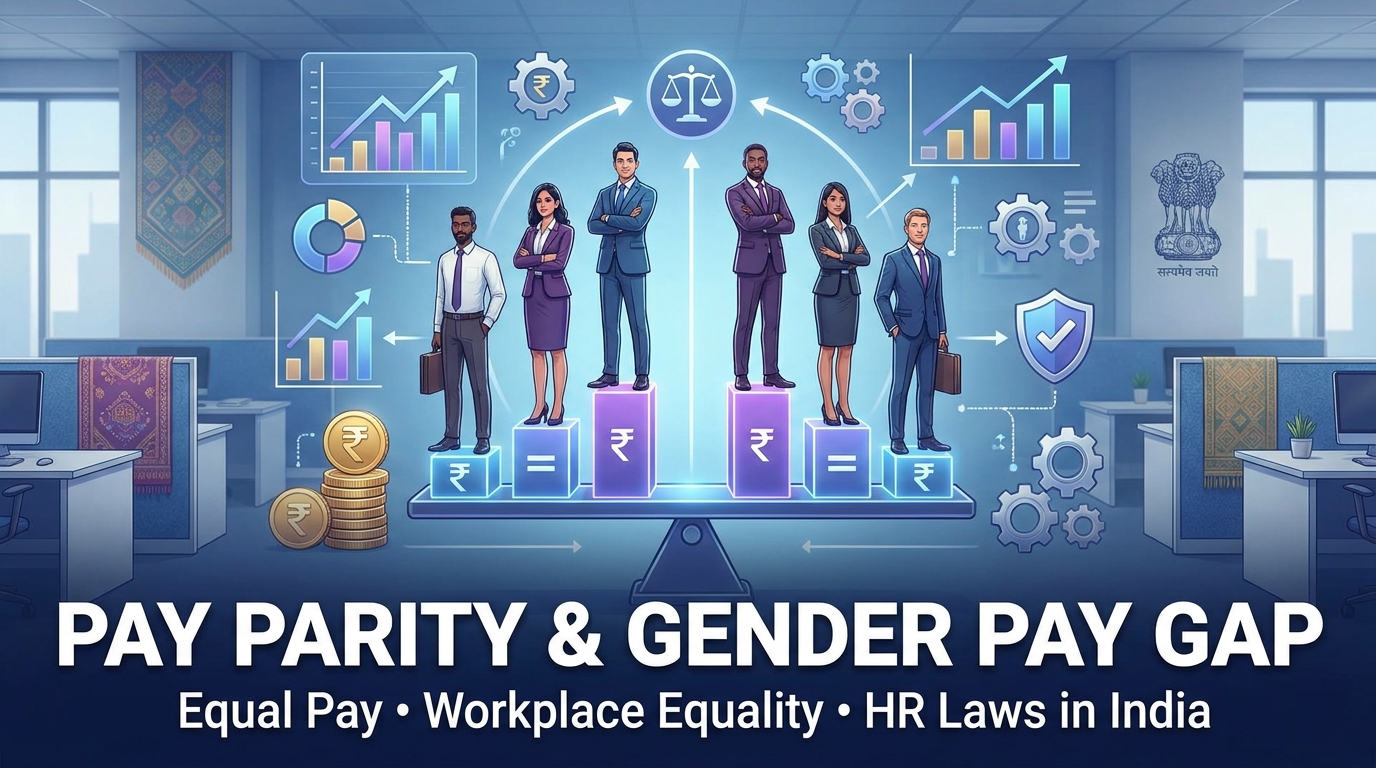
Pay Parity: Meaning, Gender Pay Gap, Causes, Importance & Laws in India
Learn what pay parity means, understand gender pay parity, causes of the gender pay gap, importance of pay equity, and laws related to equal remuneration in India.
Introduction
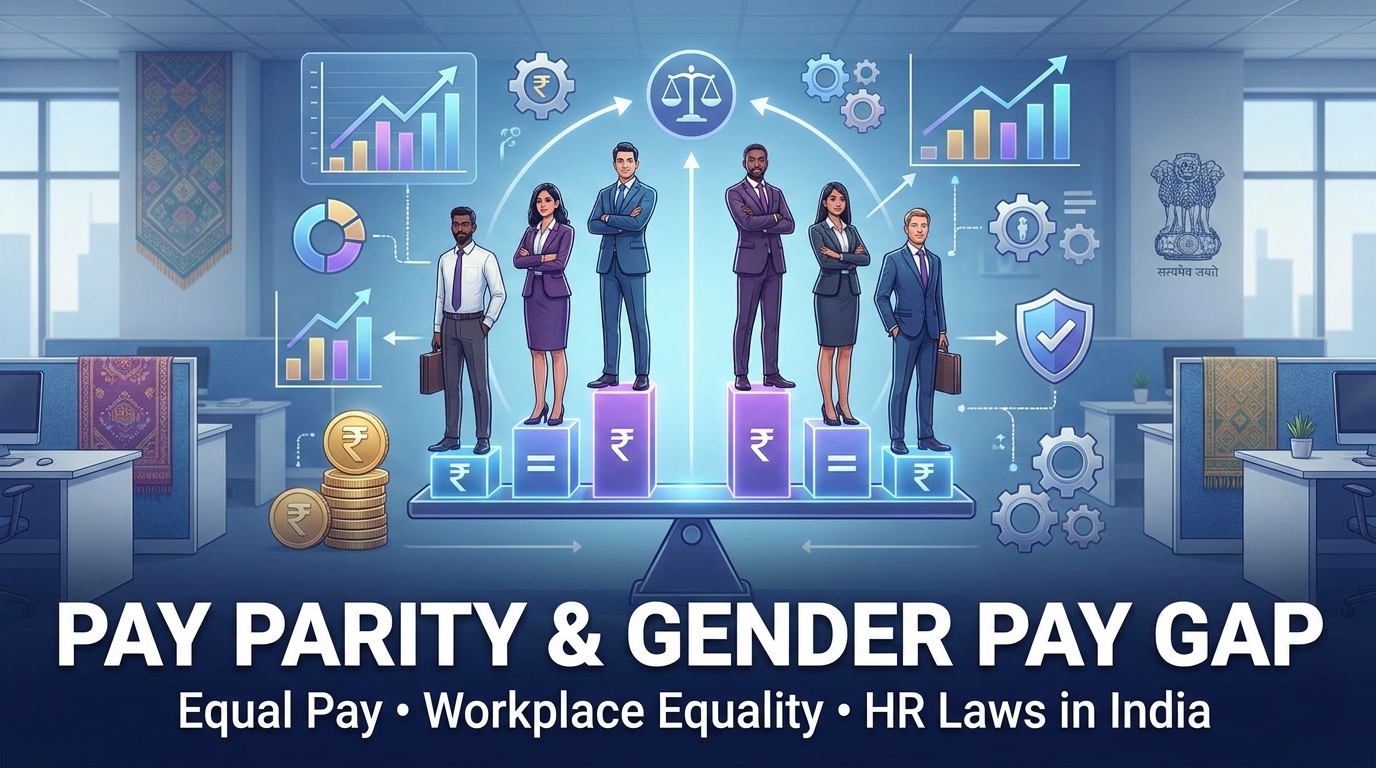
Pay parity refers to equal compensation for employees performing work of equal value, regardless of gender, caste, ethnicity, or other protected characteristics.
It is also known as:
- Equal Pay
- Pay Equity
The main goal of pay parity is to eliminate unfair wage differences caused by:
- Gender stereotypes
- Social conditioning
- Biases in hiring and promotions
- Unequal access to opportunities
Pay parity improves:
- Employee morale
- Productivity
- Workplace fairness
- Organizational transparency
What is Pay Parity?
Pay parity means providing equal pay to employees who perform:
- Similar work
- Comparable responsibilities
- Equal effort and skill
- Similar working conditions
It ensures employees are compensated fairly regardless of:
- Gender
- Race
- Caste
- Religion
- Ethnicity
- Other protected characteristics
Pay parity helps reduce:
- Wage discrimination
- Employee dissatisfaction
- Productivity loss caused by unfair compensation practices
What is Gender Pay Parity?
Gender pay parity refers to equal pay for male and female employees performing the same work under similar conditions.
It promotes:
- Gender equality
- Financial fairness
- Equal career opportunities
Gender pay parity helps:
- Reduce unexplained wage gaps
- Increase workforce participation among women
- Improve employee motivation and engagement
Key Initiatives Supporting Gender Pay Parity
Organizations and governments promote gender pay equity through:
- Pay transparency
- Compensation audits
- Gender pay gap awareness
- Flexible work policies
- Equal opportunity programs
Factors Contributing to the Gender Pay Gap
1. Gender Stereotypes
Traditional beliefs often influence hiring, promotions, and salary decisions unfairly.
2. Cultural Conditioning
In many societies, women are wrongly perceived as less productive than men, leading to unequal compensation.
3. Implicit Bias
Unconscious bias affects salary decisions without deliberate discrimination.
Managers may unknowingly undervalue female employees.
4. Job Segregation
Certain industries are still viewed as:
- Male-dominated
- Female-oriented
This occupational segregation contributes to wage differences.
Example
- Men are often encouraged toward engineering and finance
- Women are often directed toward administrative or caregiving roles
5. Lack of Pay Transparency
When salary structures are hidden, unequal pay practices remain unnoticed.
Transparent salary systems help reduce wage gaps.
6. Career Breaks and Caregiving Responsibilities
Women often face:
- Maternity leave penalties
- Reduced working hours
- Career interruptions due to caregiving responsibilities
These factors contribute to lower long-term earnings.
7. Unequal Access to Opportunities
Limited access to:
- Education
- Leadership roles
- Skill development opportunities
can widen the pay gap further.
Causes of the Global Pay Gap
The Global Gender Gap
The global gender pay gap affects:
- Women
- Mothers
- Minority groups
- Economically marginalized communities
According to the 2023 World Economic Forum Global Gender Gap Report, India ranked 127 out of 146 countries.
Systemic Discrimination
Systemic discrimination includes:
- Racism
- Ageism
- Caste discrimination
- Disability discrimination
- Gender discrimination
These inequalities become deeply embedded in workplace systems and policies.
Social Discrimination
Social expectations often assign unpaid domestic responsibilities primarily to women.
This limits:
- Career growth
- Professional opportunities
- Income potential
Political and Economic Barriers
Economic inequality, unequal education access, workplace violence, and discriminatory labor systems contribute to wage disparities worldwide.
Difference Between Gender Pay Gap and Unequal Pay
| Aspect | Gender Pay Gap | Unequal Pay |
|---|---|---|
| Meaning | Difference in average earnings between men and women | Paying employees differently for the same work |
| Focus | Overall workforce trends | Individual salary discrimination |
| Cause | Social and economic factors | Direct unequal compensation |
| Scope | Broad | Specific cases |
Why Pay Parity Matters
Pay inequity negatively impacts:
- Employee morale
- Workplace culture
- Talent acquisition
- Employee retention
- Productivity
- Company reputation
- Financial security of employees
Fair compensation systems help organizations:
- Build trust
- Improve performance
- Reduce turnover
- Strengthen employer branding
How Organizations Can Achieve Pay Parity
1. Conduct Compensation Audits
Salary audits help organizations:
- Identify wage gaps
- Detect unfair pay practices
- Create structured salary bands
2. Increase Pay Transparency
Sharing salary ranges improves:
- Trust
- Transparency
- Fairness
Employees better understand how compensation decisions are made.
3. Review Organizational Policies
Organizations should regularly review:
- Promotion policies
- Appraisal systems
- Hiring practices
- Reward structures
4. Address Employee Concerns
Companies should actively investigate complaints related to:
- Unequal pay
- Unfair promotions
- Biased performance evaluations
5. Train Managers on Bias Awareness
Training on:
- Unconscious bias
- Workplace discrimination
- Inclusive leadership
helps create fairer workplaces.
6. Create Inclusive Workplaces
Organizations should provide:
- Equal opportunities
- Flexible work policies
- Equal growth opportunities
- Fair performance management systems
Pay Equity vs Pay Parity
| Pay Equity | Pay Parity |
|---|---|
| Focuses on fair compensation based on value of work | Focuses on equal pay for equal work |
| Considers experience and skills | Focuses on compensation equality |
| Broader compensation philosophy | Specific equality objective |
The Equal Remuneration Act, 1976
The Equal Remuneration Act, 1976 was introduced in India to prevent discrimination in wages and employment.
Key Objectives of the Act
- Equal pay for equal work
- Prevention of gender-based wage discrimination
- Equal treatment in recruitment and promotions
- Protection against workplace discrimination
Key Provisions of the Equal Remuneration Act
1. Equal Pay for Equal Work
Men and women performing the same work must receive equal wages.
2. Non-Discrimination in Employment
Employers cannot discriminate during:
- Recruitment
- Promotions
- Transfers
- Training opportunities
3. Grievance Redressal Mechanisms
Employees can raise complaints related to unequal compensation.
4. Monitoring Authorities
Authorities are established to ensure organizations comply with equal pay regulations.
Laws Supporting Pay Equity in India
Several laws support fair compensation practices in India:
- Equal Remuneration Act, 1976
- Minimum Wages Act, 1948
- Maternity Benefit Act, 1961
- Industrial Employment (Standing Orders) Act, 1946
Indian courts also strongly support the principle of:
“Equal pay for equal work.”
How HRMS Platforms Help in Pay Equity Management
Modern HRMS platforms help organizations:
- Track salary structures
- Conduct compensation audits
- Improve transparency
- Reduce manual payroll errors
- Ensure policy compliance
ZestNexus helps organizations manage HR operations, performance management, and compensation systems efficiently.
Conclusion
Pay parity is essential for building fair, inclusive, and productive workplaces.
In Simple Terms
- Pay Parity ensures equal compensation for equal work
- Gender Pay Parity focuses specifically on reducing gender-based wage gaps
Organizations that promote pay equity benefit through:
- Higher employee satisfaction
- Better retention
- Improved productivity
- Stronger workplace culture
Creating transparent and fair compensation systems is not only a legal responsibility but also an important step toward social and organizational progress.
Frequently Asked Questions (FAQs)
1. What is pay parity?
Pay parity means providing equal pay to employees performing work of equal value, regardless of gender or other protected characteristics.
2. What is gender pay parity?
Gender pay parity means men and women performing the same work receive equal compensation.
3. What causes the gender pay gap?
Major causes include:
- Gender stereotypes
- Implicit bias
- Job segregation
- Unequal opportunities
- Lack of pay transparency
4. What is the Equal Remuneration Act, 1976?
It is an Indian law ensuring equal pay for men and women performing the same work.
5. Why is pay parity important?
Pay parity improves:
- Employee morale
- Workplace fairness
- Productivity
- Talent retention
- Organizational reputation
Similar blogs you may like